The return of Gothic 1 in remake form has been one of the most closely watched projects among classic RPG fans. Originally released in 2001, the game stood out for its harsh world, systemic design, and freedom of progression. In its modern version, developers aim to preserve the core identity while rebuilding the experience with updated technology, improved controls, and contemporary visual standards.
Visual overhaul and technical foundation
The remake is built using Unreal Engine 5, which immediately changes how the Colony is presented. Lighting is more dynamic, environments are denser, and character models carry far more detail compared to the original polygonal figures. The shift is not just cosmetic; it alters how players perceive distance, danger, and spatial awareness.
Modern rendering techniques such as global illumination and high-resolution textures allow locations like the Old Camp and the Swamp Camp to feel grounded and atmospheric. Fog, shadows, and weather effects contribute to a more believable ecosystem, something that aligns with the original vision but was limited by early 2000s hardware.
Performance on PC in 2026 is generally stable across mid-range systems, with scalable settings ensuring accessibility. However, the use of advanced engine features means that higher-end GPUs benefit from smoother frame rates and improved visual fidelity, especially in densely populated areas.
Character design and animation improvements
One of the most noticeable changes lies in character presentation. NPCs now feature realistic facial structures, detailed armour, and varied clothing that reflects their faction and status within the Colony. This visual clarity strengthens the social hierarchy that was always central to Gothic’s narrative.
Animations have been completely reworked. Movement feels weightier, combat transitions are smoother, and interactions such as climbing or drawing weapons are more fluid. These adjustments reduce the stiffness that defined the original while keeping a deliberate pacing.
Voice acting and lip-syncing have also been modernised, with improved localisation for multiple regions. Dialogue delivery feels more natural, which helps maintain immersion during longer conversations and quest interactions.
Gameplay systems: preserving depth while modernising controls
The original Gothic was known for its unconventional control scheme, which often required players to adapt rather than rely on familiar inputs. The remake introduces a revised control layout that aligns with modern PC standards while offering an optional classic mode for purists.
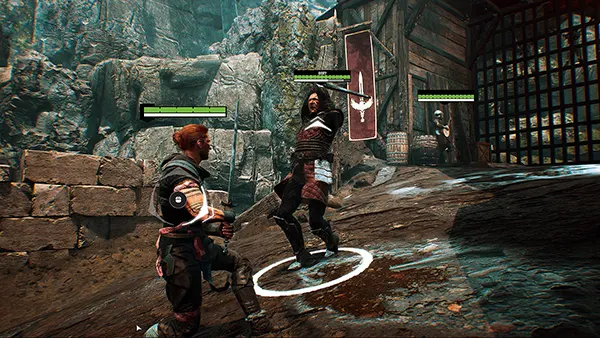
Combat remains timing-based, focusing on rhythm rather than button mashing. The system now benefits from clearer animations and hit feedback, making encounters more readable without simplifying the underlying mechanics. Players still need to commit to attacks and manage positioning carefully.
Progression continues to revolve around learning from trainers and investing in skills. This approach avoids instant power scaling and reinforces the sense of gradual mastery. The remake retains this philosophy, ensuring that character development feels earned rather than automatic.
AI behaviour and world interaction
Artificial intelligence has been significantly expanded. NPCs follow more complex daily routines, react dynamically to player actions, and engage in faction-based conflicts with greater consistency. This builds on the systemic design that made the original world feel alive.
Creatures now display more varied behaviours, including group tactics and territorial responses. Hunting requires observation and planning rather than straightforward aggression, especially in early stages when the player is still vulnerable.
Environmental interaction has also been refined. Objects can be manipulated more intuitively, and the interface provides clearer feedback without removing the need for experimentation. This balance keeps the exploratory nature intact.
Narrative structure and player freedom in a modern context
The story of Gothic 1 remains largely unchanged, focusing on the unnamed hero’s arrival in the penal Colony and the struggle between factions. What has evolved is the delivery of narrative elements through improved cinematics and dialogue pacing.
Quest design continues to avoid excessive guidance. Players are expected to pay attention to instructions, interpret clues, and make decisions that influence faction alignment. This design contrasts with many modern RPGs that rely heavily on markers and minimap indicators.
Freedom of choice remains a defining feature. Players can approach objectives in multiple ways, whether through combat, diplomacy, or exploration. The remake respects this structure while ensuring that objectives are clearer without becoming restrictive.
Balancing nostalgia with modern expectations
One of the main challenges for the developers has been maintaining the original tone while adapting to current player expectations. This includes refining pacing, reducing unnecessary friction, and improving usability without altering the core identity.
User interface design has been streamlined, offering better inventory management and clearer menus. At the same time, it avoids excessive simplification, preserving the sense of involvement that defined the original experience.
Feedback from early builds suggests that the remake appeals both to returning players and newcomers. By focusing on authenticity rather than reinvention, the project positions itself as a faithful reinterpretation rather than a complete redesign.