Delta Force: Hawk Ops on mobile is a free-to-play tactical first-person shooter that blends large-scale battles with an extraction-style mode. By 2026, the game has developed into one of the more ambitious shooters on smartphones, combining vehicle combat, structured objectives, and detailed weapon customisation. Its main strength is that it encourages teamwork and planning, rather than relying only on fast reflexes and constant rushing.
Main Modes: Warfare and Hazard Operations
The mobile version revolves around two major gameplay experiences. The first is Warfare, a large-scale mode where two teams fight across wide maps for objectives. Players respawn frequently, which keeps matches dynamic and allows squads to take calculated risks, push lanes, and keep pressure on capture zones without being eliminated permanently.
The second key mode is Hazard Operations, designed around extraction mechanics. Here the focus shifts from constant respawns to survival. You deploy with equipment, collect loot, complete tasks, and attempt to extract while competing against both AI and real players. A single mistake can end a run and cost valuable gear, which makes the pacing slower and the decision-making much more important.
In 2026, the difference between these modes also defines how you improve as a player. Warfare is ideal for learning maps, recoil control and movement quickly because fights happen often. Hazard Operations rewards patience and discipline, teaching squads when to rotate, when to disengage, and how to avoid turning a good run into a complete loss.
How the Modes Change Squad Roles and Pacing
Warfare works best when a squad assigns simple, practical roles. One player can focus on holding angles and providing steady mid-range fire, another can take aggressive flanks, while the third supports with revives, scouting or utility. Even without perfect aim, a squad that moves together and trades efficiently will outperform random groups that play individually.
Hazard Operations creates a different kind of teamwork. Successful squads usually keep tighter spacing, communicate quickly, and avoid fights that have no clear value. Because extraction runs reward survival more than kill count, the best teams choose engagements carefully and use map knowledge to avoid getting trapped between multiple threats.
The pacing difference also impacts loadouts. Warfare allows riskier builds because you can respawn and rejoin the fight. Hazard Operations strongly rewards consistent and controllable setups, where recoil stability, reliable mid-range performance and defensive tools often matter more than raw damage output.
Weapons and Customisation: What Actually Matters
Delta Force: Hawk Ops includes modular weapon customisation with meaningful trade-offs. Attachments can improve stability, recoil control or range, but they may also reduce mobility or slow down aiming speed. In 2026, strong loadouts are usually built around real engagement distances and squad needs, rather than copying generic builds without context.
For most players, assault rifles remain the safest option because they are flexible in both open lanes and objective fights. SMGs shine in tight interiors but become less consistent in open spaces unless movement and positioning are disciplined. Snipers and DMRs can control sightlines effectively, but if too many squad members choose long-range weapons, the team may struggle to clear buildings and hold objectives.
Customisation also affects match efficiency. Players who spray too much, reload early or take fights outside their weapon’s strengths reduce their overall contribution. Squads that use controlled bursts, cover each other during reloads and choose attachments to suit the map tend to perform more consistently than players chasing the highest theoretical damage builds.
Building Effective Loadouts for Mobile Controls
Mobile aiming changes what feels “stable” compared to PC shooters. Many players improve faster by prioritising recoil control and smoothing the first seconds of firing, because most duels are decided in that early spray window. Even if a build slightly slows aim speed, it can still be stronger if it keeps shots on target more reliably.
Mode selection should guide your loadouts. In Warfare, squads can afford more specialisation: one player runs anti-vehicle equipment, another focuses on close-range clearing, and another anchors mid-range. In Hazard Operations, variety is more important than duplication, so it is smarter to ensure the squad has coverage for both close and mid-range fights, plus utility for safe rotations.
Secondary equipment should be treated as part of the overall combat system. Close-range builds benefit from smokes or tools that help cross open ground, while longer-range setups need defensive options that prevent fast squads from rushing. The most consistent squads in 2026 are not those with the flashiest aim, but those that build around teamwork and reliable engagement control.
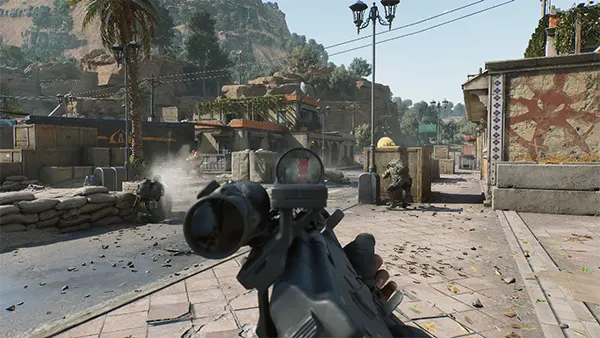
Team Play and Balance: What Feels Fair in 2026
Delta Force: Hawk Ops rewards teamwork without forcing strict role restrictions. Operator-style abilities exist, but most fights are still decided by positioning, awareness and communication. By 2026, the game’s competitive appeal remains tied to the fact that coordination and player skill matter more than any single weapon choice or isolated ability.
Balance concerns are usually linked to matchmaking swings rather than one clearly dominant weapon category. In Warfare, a well-coordinated squad can dominate flanks and collapse a defence if the opposing team plays without structure. In Hazard Operations, experience and gear knowledge can create noticeable differences, because strong squads understand extraction timing, high-risk zones and safe rotations.
Despite these factors, players can reduce randomness through repeatable habits. Staying close to teammates, rotating together, fighting from cover and avoiding solo pushes all improve consistency. The game feels most balanced when squads treat it as a tactical shooter rather than a solo run-and-gun experience.
Winning More Without Chasing the Meta
Communication is the most important advantage you can create. Short, clear callouts are the most effective: direction, distance and intent. Saying “two left corridor, close, pushing” gives teammates immediate decision support. Long explanations mid-fight rarely help and often cause delayed reactions.
Using both modes as training tools also improves overall skill. Warfare strengthens mechanics and map familiarity because fights happen constantly. Hazard Operations improves patience, timing and decision-making because survival is rewarded. Players who switch between the two usually develop stronger game sense than those who grind only one mode.
Finally, avoid “hero plays” when the squad is split. Many losses come from one player pushing alone, getting eliminated, and forcing the team into a disadvantaged fight. Calm rotations, consistent spacing and controlled engagements win far more matches in 2026 than chasing any single “meta” loadout.