Etheria: Restart Mobile enters a crowded segment of mobile RPGs where futuristic settings, squad mechanics, and gacha-style progression have already been explored extensively. The key question for players in 2026 is not whether the game works technically, but whether it offers a recognisable identity that sets it apart from competitors. Looking closely at its design, systems, and presentation helps to understand whether Etheria is simply another iteration or a project with its own direction.
Core Gameplay Systems and Their Familiarity
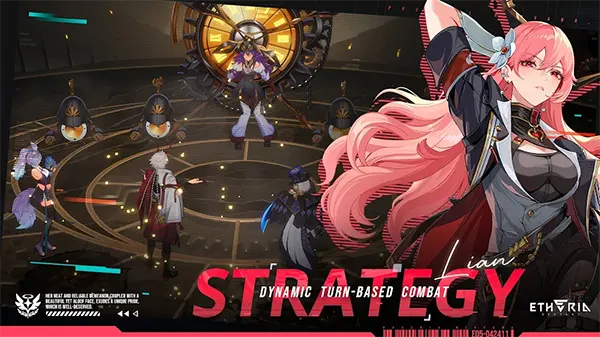
At its foundation, Etheria: Restart Mobile relies on mechanics that are well-established within the genre. Players assemble teams of characters, each defined by roles such as damage dealer, support, or controller. Combat is turn-based, with skill cooldowns, synergy bonuses, and elemental interactions shaping the outcome of battles. These systems are not new, and most experienced players will recognise them within the first hour of gameplay.
Progression follows a predictable structure: characters are upgraded through materials, duplicates enhance abilities, and equipment layers add further depth. This model has proven effective across many titles, but it also limits the sense of originality. Etheria does not radically alter this loop, instead choosing to refine it with smoother interfaces and clearer progression paths.
Where the game attempts to stand out is in pacing. Battles are faster than in many comparable RPGs, and animations are designed to minimise downtime between actions. This creates a more dynamic feel, especially for mobile users who prefer shorter play sessions. However, speed alone is not enough to define a unique identity.
Combat Depth and Strategic Variation
Despite familiar foundations, Etheria introduces subtle layers of strategy that reward careful planning. Character abilities often include secondary effects that interact with team composition, encouraging players to experiment rather than rely on a single optimal setup. These interactions can shift the outcome of encounters, particularly in higher-difficulty modes.
The AI behaviour in both PvE and PvP adds another layer of unpredictability. Opponents are not entirely scripted, which means that players must adapt rather than memorise patterns. This design choice increases replay value, although it may also frustrate those seeking consistency.
Another notable aspect is the balance between manual and automated play. While auto-battle exists, it is not always optimal, especially in complex encounters. This creates a space where player skill still matters, even in a genre often criticised for passive gameplay.
Visual Direction and World-Building
Etheria’s visual identity leans heavily into sci-fi aesthetics, combining neon-lit environments with sleek character designs. While visually appealing, this direction is not particularly uncommon. Many mobile RPGs released between 2023 and 2026 have adopted similar styles, which makes it harder for Etheria to stand out at first glance.
Character design is one of the stronger elements of the game. Each hero has a distinct silhouette and animation style, which helps with recognition during combat. However, thematic consistency varies. Some designs feel grounded in the game’s universe, while others appear influenced by broader genre trends rather than internal logic.
The world-building attempts to introduce a narrative about technological collapse and reconstruction, but its delivery is uneven. Story segments are present, yet they often take a secondary role to gameplay systems. This limits emotional engagement, especially for players who value narrative depth.
Audio Design and Atmosphere
The audio design supports the visual presentation effectively. Background music adapts to different scenarios, from exploration to combat, creating a cohesive atmosphere. While not groundbreaking, it contributes to immersion without becoming repetitive.
Voice acting is available for key characters, adding personality and context to interactions. However, not all content is fully voiced, which can break immersion during longer story sequences. This inconsistency reflects a common limitation in mobile production budgets.
Sound effects during combat are sharp and responsive, reinforcing the impact of abilities. This detail enhances the overall feel of battles, making them more engaging despite the underlying familiarity of the systems.
Monetisation, Progression Pressure, and Player Retention
Like most mobile RPGs, Etheria: Restart Mobile includes monetisation elements centred around character acquisition and resource acceleration. The gacha system plays a central role, and while rates are transparent, progression without spending can become slow at higher levels.
The game attempts to balance this by offering regular events and rewards. Players who engage consistently can build competitive teams over time, although the process requires patience. This approach aligns with industry standards rather than redefining them.
Retention mechanics are carefully structured. Daily tasks, limited-time challenges, and seasonal updates provide ongoing incentives to return. These systems are effective, but they also contribute to a sense of routine rather than discovery.
Long-Term Viability and Identity Formation
The long-term success of Etheria depends on how it evolves beyond its initial release. Updates, new characters, and gameplay modes will play a critical role in shaping its identity. Without meaningful innovation, the game risks blending into the background of similar titles.
Community engagement is another factor. Developer communication, balance updates, and responsiveness to feedback can influence how players perceive the game over time. In 2026, successful mobile RPGs are often those that adapt quickly to their audience.
Ultimately, Etheria: Restart Mobile demonstrates competence rather than bold experimentation. It refines existing ideas and presents them in a polished package, but its identity remains in development. Whether it becomes distinctive will depend on future updates rather than its current state.