Arena Breakout Season 12, Operation Unbound, launched on 12 March 2026 and became one of the most substantial updates to the mobile extraction shooter during its first three years. Its centrepiece was the heavily rebuilt Valley, officially called Valley: New Order, which gained rivers, swamp terrain, new resource areas and a much larger playable space. Yet the update mattered for more than scenery. Arena Breakout still revolves around a simple but unforgiving rule: valuable equipment means little if the operator does not leave the raid alive. Season 12 strengthened that risk-versus-reward loop through revised equipment values, new weapons, experimental gear and a map where travelling to an extraction point can be as dangerous as the firefight that produced the loot. By August 2026 the live game had already progressed beyond Season 12, but Operation Unbound remains important because it significantly changed how Valley raids are approached.
Why Gear Loss Still Defines Arena Breakout Season 12
Arena Breakout differs from conventional mobile shooters because death has an economic consequence. In Tac Ops, players enter with weapons, armour, ammunition, medical supplies and other equipment taken from their own storage. If the operator is eliminated or fails to extract before the raid ends, most carried equipment is lost. Items protected inside the player’s Case and keys kept on the keychain are exceptions to the normal loss rule. Everything else can potentially disappear with a single failed raid, including an expensive weapon build that may have required a considerable amount of Koen to assemble.
This creates the pressure that gives an Arena Breakout raid its identity. Winning several gunfights does not automatically make a session successful. A player can eliminate two operators, fill a backpack with valuable items and still finish with almost nothing if the final route to extraction goes wrong. Season 12 did not remove that basic tension. Instead, the larger Valley gave players more ground to cover and therefore more opportunities to make costly mistakes after obtaining good loot. The moment when a backpack becomes valuable is often the moment when avoiding unnecessary combat becomes more sensible than hunting another opponent.
Operation Unbound also made equipment value easier to understand before entering certain modes. Season 12 added clearer calculations for Equipment Value and Starting Value. Equipment Value represents the gear currently worn by the operator, while Starting Value covers equipment brought into the raid, with specific exceptions such as Case contents. This matters because modes including Lockdown Zone and Forbidden Zone can impose minimum equipment requirements. Season 12 raised the Lockdown Zone minimum equipment value to 50,000 Koen and its entry fee to 8,000 Koen, meaning players could not treat every higher-risk raid as a nearly free attempt.
Choosing a Loadout Without Turning Every Death Into a Disaster
The sensible response to gear loss is not to enter every raid with the cheapest possible equipment. Extremely weak armour, poor ammunition and an unreliable weapon may reduce the amount lost after death, but they can also reduce the chance of extraction. A better approach is to choose equipment that matches the objective of the raid. A player completing ordinary missions or learning the rebuilt Valley does not necessarily need the same kit as someone deliberately entering a high-value area to fight geared operators. Keeping several practical loadouts at different price levels makes it easier to control losses without deliberately entering combat at a serious disadvantage.
Ammunition deserves particular attention because an expensive gun does not automatically compensate for unsuitable rounds. Season 12 also adjusted armour interaction: lower-tier ammunition could no longer directly penetrate higher-tier armour at full durability in situations where the tier difference was too great. For example, the update specifically noted that Tier 4 7.62×39 mm BP could not penetrate a full-durability Tier 5 helmet directly. Players therefore had another reason to balance weapon cost, ammunition quality and expected opposition rather than concentrating the entire budget on attachments and armour.
Covert Ops remains useful when the aim is to rebuild resources without risking a normal Tac Ops kit. The game assigns a random weapon and equipment set, so the player’s stored equipment is not placed at risk when entering the raid. Successful extraction allows the collected supplies to be taken out, while failure costs the temporary equipment and anything found during that run. It is therefore a practical option after several expensive deaths or when learning traffic patterns on unfamiliar terrain. It does not remove the extraction requirement, but it provides a way to practise the basic loot-and-escape loop with much lower financial pressure.
Extraction Is the Real Finish Line of Every Raid
Arena Breakout treats extraction as the point at which temporary success becomes permanent progress. Loot collected during a raid is useful only when it reaches storage, the Market or another valid destination after a successful escape. This distinction changes how players should think about fights. An opponent carrying an expensive weapon may look like an opportunity, but engaging that player when the extraction point is already within reach can turn a profitable raid into a complete loss. Season 12 therefore rewards players who recognise when their objective has already been achieved and stop adding unnecessary risk.
The enlarged Valley makes route planning particularly important. A player can no longer assume that clearing one busy location means the remainder of the journey will be straightforward. Rivers, swamp sections, bridges, open spaces, buildings and newly arranged points of interest create several types of movement risk. Water can slow or complicate movement, open ground can expose players to distant fire, and obvious crossings can become places where another squad waits for operators travelling towards an exit. A route that looks shortest on the map may not be the safest route when the backpack contains the best loot of the raid.
Extraction planning should begin near the start of a match rather than after the backpack is full. Players benefit from checking available exits, considering the direction they are likely to travel and keeping enough time for unexpected resistance. Medical supplies, damaged limbs, reduced stamina and a heavy backpack can all make the final part of a raid slower than expected. The problem becomes more serious when a team separates during looting. A successful squad does not need to move as a single group every second, but players should still know how they intend to regroup and which extraction route is realistic if combat forces them away from their original path.
Why Leaving With Less Loot Can Be the Better Result
One of the hardest habits to learn in an extraction shooter is knowing when to stop looting. Arena Breakout constantly creates reasons to stay a little longer: another container, another building, another eliminated operator or another possible high-value item. Season 12 added more reasons to search Valley, including new hidden containers and special objects associated with the rebuilt environment. It also introduced the Gold Dumbbell as a high-value item exclusive to Valley: New Order. These additions make continued searching tempting, but every extra stop also uses time and can move the player away from a safer route.
A useful decision is to compare the value already secured with the realistic benefit of continuing. If an operator is carrying expensive items, has damaged armour, limited medical supplies and only a small amount of ammunition remaining, another fight offers poor risk efficiency even when an enemy position is known. Leaving the raid with a moderately valuable backpack is usually more useful to long-term progression than repeatedly losing very expensive hauls while trying to maximise every run. The extraction rate matters because stored equipment and Koen allow future raids to be funded consistently.
This is also why confident movement should not be confused with constant aggression. Season 12 supplied players with more combat options, including the G28 marksman rifle, SCAR-HAMR assault rifle, A545 assault rifle, Daydream KS23 shotgun, Individual Ballistic Shield and specialised observation equipment. These tools can create an advantage, but carrying better equipment increases the value at risk. A powerful loadout should make it easier to complete a raid objective; it should not become a reason to take every available fight. The strongest use of expensive gear is often reaching the extraction point with it still equipped.
How Swampy Valley Changed Season 12 Raids
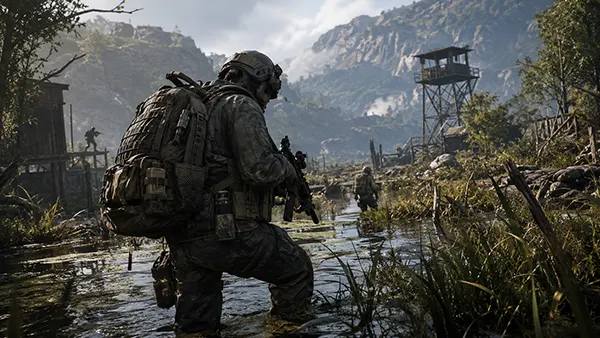
Valley: New Order was the defining map change of Operation Unbound. The developers increased the map area by 47% and stated that more than 90% of Valley had been reworked. The redesign added rivers and swamps alongside new resource areas and revised routes. It was therefore much more than a cosmetic update to the existing Valley. Players who had memorised the older version had to reconsider lines of sight, movement between locations and the amount of time required to cross the map. Familiarity with the previous Valley remained useful, but it was no longer enough to predict every rotation.
The swamp and river terrain changes the pace of movement without turning Arena Breakout into a complicated simulation. Water creates sections where crossing can be more restrictive than travelling over dry ground, while the larger map gives players additional ways to approach or avoid busy locations. Open sections can favour rifles and marksman weapons, whereas buildings and narrow routes still provide opportunities for close-range equipment. Season 12’s G28 fits naturally into the longer sightlines found across the expanded Valley, while the A545 offers a more conventional assault-rifle option for players moving between outdoor and built-up areas.
The rebuilt Valley also received more environmental interactions and raid activities. Season 12 added new hidden containers, civilian vehicles, homing pigeons and drift bottles, while random event missions could appear during raids and be accepted from designated devices. The Type 151 Handheld Radio Replica was another Valley-specific experimental item, providing information about enemy encounters occurring elsewhere. These additions gave players more reasons to move away from the most obvious loot buildings, although they also made route decisions more complicated because useful opportunities could appear away from the original plan.
What Season 12 Gets Right and Where the New Valley Feels Uneven
The strongest part of the Season 12 Valley redesign is that it supports several different raid priorities. A player can concentrate on missions, search for valuable items, pursue PvP or deliberately avoid heavily contested routes and work towards extraction. The increased size gives squads more room to reposition, while new terrain makes the route between major locations more important than before. The map also suits Arena Breakout’s central idea particularly well: a successful raid is not simply about winning a gunfight but about making a series of sensible decisions until the operator is safely outside the combat area.
The extra space is not automatically an improvement in every situation. Larger maps can produce quieter stretches between engagements, and the developers acknowledged some criticism after Season 12 launched. In an April 2026 developer Q&A, the team said Valley was not yet where it wanted the map to be and specifically addressed complaints about excessive invisible barriers. Players had also raised concerns that the larger layout could sometimes make encounters feel too infrequent. That response is significant because it confirms that the redesign brought genuine trade-offs rather than simply replacing the previous Valley with a universally better version.
As a Season 12 update, Operation Unbound succeeds most clearly when the new Valley is considered together with Arena Breakout’s existing loss-and-extraction system. Swamps, rivers, revised routes and new loot matter because every detour has a potential cost. New weapons and equipment matter because taking them into a raid puts value at risk. Extraction matters because even a strong combat performance can become an economic loss if the operator never reaches the exit. Season 12 did not change Arena Breakout into a different kind of shooter; it made the consequences of movement, equipment choices and timing more noticeable, which is exactly where the game’s extraction format works best.