Duriano: Roguelike RPG is a top-down arena roguelite that combines fast combat, Norse mythology and build-based progression in a format designed for repeated mobile sessions. The player controls a durian hero, fights waves of enemies, chooses weapons and upgrades during a run, and gradually develops stronger options between attempts. This structure makes each session self-contained while still contributing to longer-term progression. The result is a game where a short run is not simply a smaller version of a traditional RPG campaign: it is the main unit of gameplay, and every decision made during that run can change how the next stage of the battle develops.
How Short Runs Define the Core Gameplay
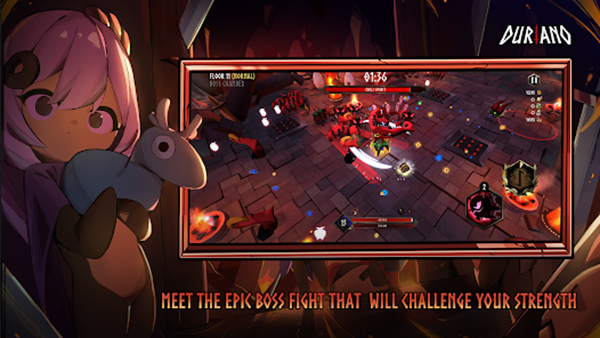
The central idea behind Duriano is straightforward: enter an arena, fight enemies, collect improvements and try to survive long enough to reach the next major challenge. The game uses a top-down perspective, allowing the player to see the surrounding battlefield and react to enemies approaching from different directions. This creates a combat rhythm that works particularly well on mobile devices because a single session can be focused on immediate movement, positioning and upgrade choices rather than a long sequence of story missions.
A run also creates a clear sense of progression within a relatively limited period. The character starts with a basic set of capabilities, while further choices gradually shape the build. Weapons, items, character abilities and divine options can be combined in different ways, so the same hero does not necessarily play identically from one attempt to another. The important point is that the player is not simply increasing one statistic repeatedly. The build develops according to the options that become available during the current run.
This approach changes how players think about failure. Losing a run does not mean that the entire experience has been wasted, because Duriano also includes permanent progression and unlockable content. New heroes, weapons and other elements can become available as the player continues playing. The short-run structure therefore connects immediate combat with longer-term development: one session tests a particular build, while several sessions gradually expand the range of strategies available.
Why the Run-Based Format Works on Mobile
Mobile games often need to accommodate sessions that are interrupted by everyday activities. Duriano’s run-based design suits this environment because the gameplay is divided into clear attempts rather than requiring players to remember a large number of simultaneous quests and locations. Each run has its own beginning, development and conclusion, giving the player a natural stopping point.
The format also keeps the focus on active decisions. During combat, the player must move around the arena, avoid threats and select improvements that support the current build. There is less need to spend time navigating complicated menus between every encounter. The action remains at the centre of the experience, while progression systems provide additional depth for players who want to experiment with different combinations.
Another advantage is replayability. A conventional level may become familiar after several attempts because its enemies and objectives remain largely predictable. Roguelite design approaches the problem differently by changing the available choices and challenges between runs. Duriano uses this principle to make repeated sessions more meaningful, since players can approach the same broad objective with a different combination of heroes, weapons, divine paths and upgrades.
Random Events and Decisions During a Run
Randomness is an important part of Duriano’s design because it prevents every run from following exactly the same sequence. The developer describes the game as featuring random events and changing challenges, which means players need to adapt instead of following one fixed recipe. The practical effect is simple: a build that worked well in one attempt may need to be adjusted when a different set of options appears in another.
Random events are useful because they turn progression into a series of decisions rather than a predetermined upgrade path. When the game presents different possibilities, the player has to consider what the current character actually needs. A defensive improvement may be more useful when enemies are becoming difficult to avoid, while an offensive option can make sense when the existing build already provides enough protection. This creates strategic variety without requiring complicated controls.
The randomness also gives short runs their own identity. Two sessions can begin with similar conditions but develop in different directions because the available weapons, bonuses or other choices are not identical. This is particularly relevant to a roguelite game: the purpose of randomness is not simply to make the game unpredictable, but to encourage players to work with the situation they have been given.
Build Choices Make Each Attempt Different
Duriano’s build system combines several categories of progression. The official description highlights different durian heroes, weapons, God’s Trails and items as elements that can be combined to create a build. These systems allow players to look for combinations that complement one another instead of treating every upgrade as an isolated improvement.
Weapons are particularly important because they influence how the character deals with enemies, while divine abilities and trails add another layer to the build. A player may therefore start a run with one idea and change direction after seeing the available options. This flexibility is one of the main reasons the game can support repeated attempts without requiring a completely different campaign for every play style.
Build experimentation also makes mistakes useful. Choosing an upgrade that turns out to be less effective can reveal what a particular combination lacks. Over time, players can learn which attributes work together and which choices create problems later in a run. The game consequently rewards observation and adaptation rather than relying only on reflexes.
Permanent Progression and Long-Term Replayability
The distinction between temporary run progression and permanent progression is central to Duriano. Improvements made during a run help the character survive that specific attempt, while permanent unlocks provide reasons to continue after a defeat. The developer has described permanent upgrades, new heroes, weapons and other unlockable content as part of the game’s broader progression system.
This structure gives every attempt a place within a larger progression cycle. A difficult run can still provide useful experience because the player learns more about enemy behaviour, build combinations and the available systems. At the same time, continued play can expand the player’s options, making future runs different from the first attempts. The result is a progression loop built around learning as much as numerical improvement.
Duriano also offers different ways to approach its gameplay. Current mobile information refers to modes including Journey and Ranked play, while later updates have added further adjustments and balancing changes. Ranked Mode is particularly notable because it gives players a more competitive framework for testing their ability, while the broader progression systems support experimentation and character development.
What Makes Duriano’s Mobile Structure Distinctive
The game’s most recognisable feature is the combination of an unusual hero concept with a familiar roguelite framework. Instead of placing a conventional warrior or mage at the centre, Duriano uses a durian hero within a setting inspired by Norse mythology. The contrast between the fruit-based character design and the darker mythological setting gives the game a visual identity without changing the underlying focus on combat and progression.
Duriano also combines several systems without making the player manage a traditional party or a large open-world map. The arena remains the immediate focus, while heroes, weapons, God’s Trails, items and permanent upgrades provide depth around the combat. This makes the game easier to understand at a basic level while leaving room for more involved build experimentation as players become familiar with its systems.
As of 2026, the game continues to receive updates, including additional characters and improvements to the interface and gameplay systems. The mobile release therefore represents an evolving version of Duriano rather than a static product. Its short runs, random events and persistent progression work together to create a format suited to repeated play: each session has a clear objective, each build can develop differently, and the wider game continues to provide new options to explore.